





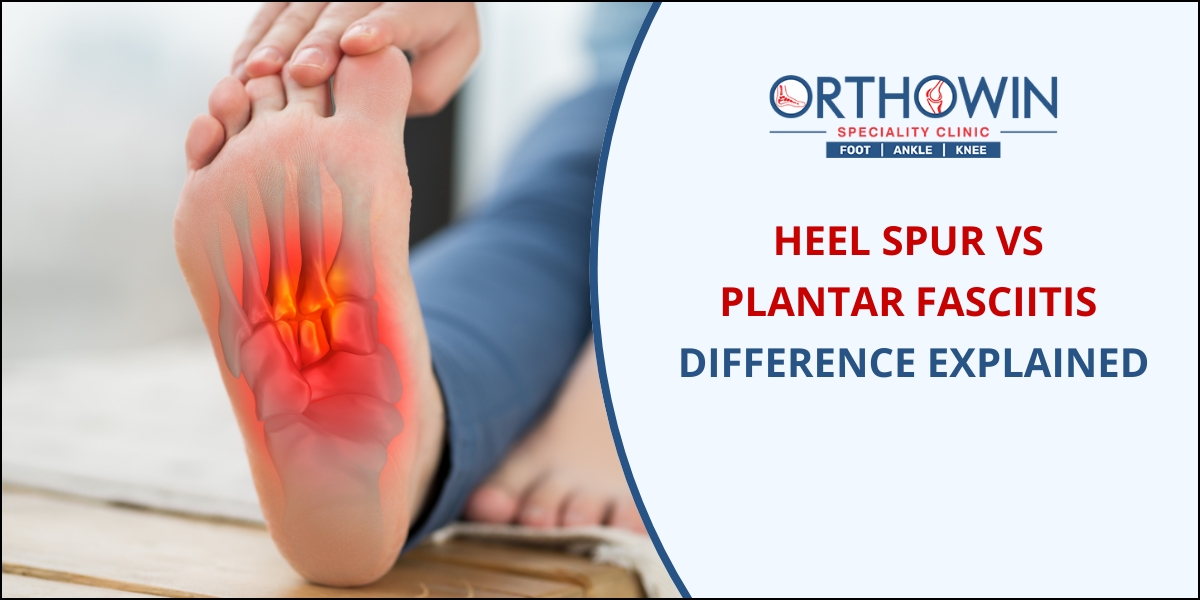
Heel pain is one of the most common foot problems affecting people of all ages — especially those who stand for long hours, walk extensively, run, or work desk jobs. Two conditions are often confused: heel spur and plantar fasciitis.
Although they sound similar and may occur together, they are not the same condition. Understanding the difference helps you get the right treatment faster and avoid long-term pain.
What is Plantar Fasciitis?
Plantar fasciitis is inflammation of the plantar fascia, a thick band of tissue connecting your heel bone to your toes. This tissue supports the arch of your foot and absorbs shock while walking.
Common Causes
- Standing for long hours
- Sudden increase in walking or running
- Flat feet or high arches
- Obesity or weight gain
- Improper footwear
- Tight calf muscles
Typical Symptoms
- Sharp heel pain when taking the first steps in the morning
- Pain after long sitting or rest
- Pain reduces after walking for some time
- Tenderness under the heel
Plantar fasciitis is the most common cause of heel pain.
What is a Heel Spur?
A heel spur is a bony growth (calcium deposit) that develops on the underside of the heel bone (calcaneus). It forms gradually due to long-term stress and pulling of the plantar fascia.
Common Causes
- Chronic plantar fasciitis
- Repetitive strain on foot ligaments
- Poor footwear support
- Excess body weight
- Long-term standing or sports activity
Typical Symptoms
- Localized heel pain
- Discomfort while walking barefoot
- Pain during prolonged standing
- Sometimes no symptoms at all
Many people have heel spurs without pain — the spur itself isn’t always the main problem.
Heel Spur vs Plantar Fasciitis: Key Differences
| Feature | Plantar Fasciitis | Heel Spur |
|---|---|---|
| Condition Type | Soft tissue inflammation | Bone growth |
| Main Cause | Micro-tears in plantar fascia | Long-term stress & calcification |
| Pain Timing | Morning first-step pain | Continuous or pressure pain |
| Diagnosis | Clinical exam | X-ray confirmation |
| Common Occurrence | Very common | Often secondary |
| Treatment Focus | Reduce inflammation | Treat underlying strain |
Important: Most heel pain is due to plantar fasciitis, not the spur itself.
Why Do Both Conditions Occur Together?
Long-term pulling of the plantar fascia causes irritation and inflammation. Over time, the body may deposit calcium at the attachment site, forming a heel spur.
So, the sequence often is:
Foot strain → Plantar Fasciitis → Chronic stress → Heel Spur formation
This is why treating only the spur without addressing inflammation rarely works.
Who is at Higher Risk?
You may develop heel pain if you:
- Work in jobs requiring prolonged standing (teachers, factory workers, healthcare staff)
- Run or walk frequently
- Wear hard or flat footwear
- Are overweight
- Have diabetes or arthritis
- Spend long hours sitting and suddenly become active
Diagnosis of Heel Pain
A heel pain specialist usually performs:
- Detailed medical history
- Foot examination
- Walking pattern assessment
- X-ray (to detect heel spur)
- Ultrasound or MRI (in chronic cases)
Correct diagnosis ensures faster recovery.
Modern Treatment Options
1. Conservative Treatment (First Line)
Most patients recover without surgery.
- Rest and activity modification
- Stretching exercises
- Physiotherapy
- Silicone heel pads / orthotics
- Proper footwear
- Anti-inflammatory medication
2. Advanced Non-Surgical Treatments
- Shockwave Therapy (ESWT)
- PRP injections
- Laser therapy
- Ultrasound therapy
These treatments promote tissue healing and reduce chronic inflammation.
3. When is Surgery Needed?
Surgery is rarely required and considered only when:
- Pain persists for 9–12 months
- Conservative treatment fails
Best Exercises for Heel Pain Relief
- Calf stretching
- Plantar fascia stretching
- Rolling foot over frozen water bottle
- Towel stretch exercise
- Toe curls and strengthening exercises
Consistency is more important than intensity.
Prevention Tips
- Wear cushioned footwear
- Avoid walking barefoot on hard floors
- Maintain healthy body weight
- Stretch before and after exercise
- Replace worn-out shoes regularly
- Take breaks during long standing hours
When Should You See a Specialist?
Consult a heel pain expert if:
- Pain lasts more than 2–3 weeks
- Morning heel pain worsens
- Difficulty walking normally
- Swelling or severe tenderness develops
Early treatment prevents chronic heel problems.
Dr. Chetan Oswal – Heel Pain Specialist in Pune
If you are experiencing persistent heel pain, morning heel pain, or difficulty walking comfortably, consulting an expert is important. Dr. Chetan Oswal is a well-known heel pain specialist in Pune offering advanced diagnosis and heel pain treatment in Pune for conditions like plantar fasciitis, heel spur, sports injuries, and chronic foot pain. His treatment approach focuses on non-surgical heel pain treatment, including shockwave therapy, customized orthotics, physiotherapy, and rehabilitation programs that help patients recover faster and prevent recurrence. Patients searching for the best doctor for heel pain in Pune trust Dr. Chetan Oswal for personalized care, long-term relief, and improved mobility.