





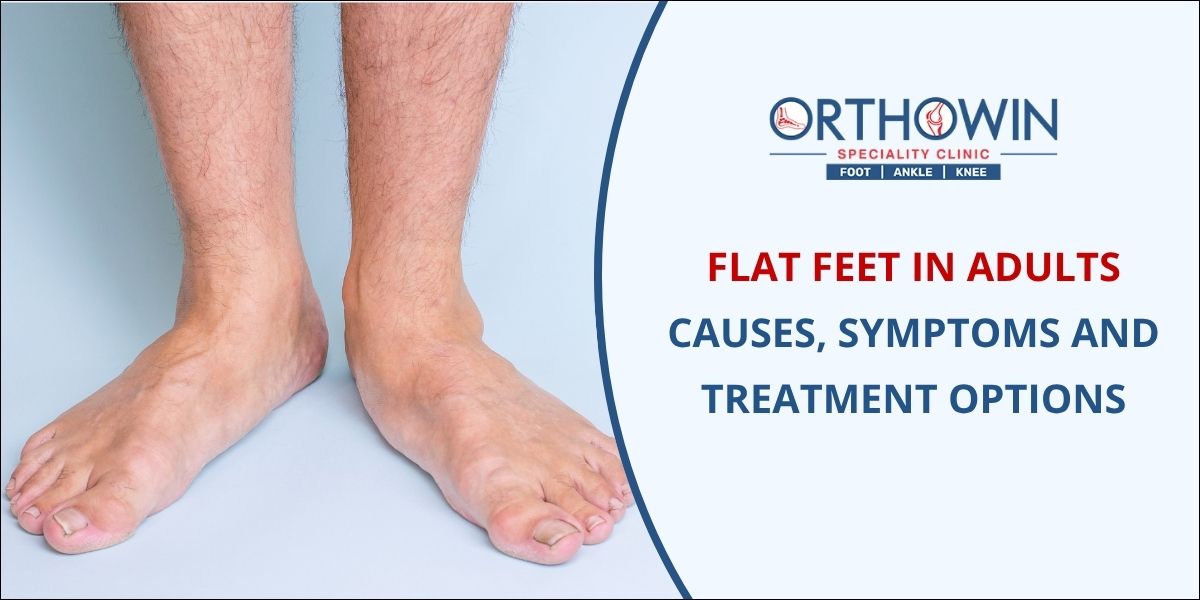
Flat feet in adults is a condition where the inner arch of the foot is low or collapses when standing, and it may be present since childhood or develop later due to tendon weakness, arthritis, injury, weight gain or diabetes. Some people have no symptoms, while others notice pain along the inner ankle or arch, tired feet, swelling or difficulty walking for long. Treatment ranges from footwear changes, insoles and exercises to surgery in selected cases. A foot and ankle specialist can identify the cause and suggest suitable options.
This article explains why flat feet develop in adults, which symptoms to look out for and how the condition is assessed and treated.
What Are Flat Feet?
A normal foot has an arch on the inner side, supported by bones, ligaments and tendons. In a flat foot, this arch is lowered so most of the sole touches the ground when standing. Doctors often describe flat feet as:
- Flexible flat foot: the arch appears when sitting or standing on the toes, but flattens on standing
- Rigid flat foot: the arch stays flat whether or not you are standing, often due to arthritis or joint problems
Read more about the condition on our flatfoot treatment page.
What Causes Flat Feet in Adults?
Posterior tibial tendon dysfunction
The posterior tibial tendon runs along the inside of the ankle and helps hold up the arch. If it becomes inflamed, stretched or torn, the arch can gradually collapse. This is one of the most common causes of flat feet that develop in adulthood.
Arthritis
Rheumatoid arthritis, osteoarthritis or arthritis after an injury can damage the joints of the midfoot and hindfoot, causing the arch to drop.
Injury
Fractures, dislocations or ligament injuries in the foot and ankle can change the shape of the foot over time.
Diabetes and nerve problems
Diabetes can affect nerves and the structure of the foot. In some people, this leads to a condition called Charcot foot, where the arch can collapse. People with diabetes should have regular foot checks.
Other risk factors
- Increased body weight
- Ageing and loss of tendon strength
- Pregnancy, due to hormonal changes and weight gain
- Flat feet that were present since childhood
Symptoms of Flat Feet in Adults
- Pain or tiredness in the arch, heel or inner ankle, especially after long periods of standing or walking
- Swelling along the inside of the ankle
- A visible change in foot shape, with the heel tilting outwards
- Difficulty standing on tiptoe
- Pain on the outer side of the ankle in later stages
- Uneven shoe wear
If your foot shape is changing or the pain is not settling with rest, it is a good idea to get it checked early.
How Are Flat Feet Diagnosed?
Diagnosis begins with a discussion of your symptoms and a physical examination. The doctor looks at the foot while you sit, stand and walk, checks tendon strength, joint flexibility and calf tightness, and may ask you to stand on your toes.
Tests may include:
- Weight-bearing X-rays to study bone alignment and arthritis
- Ultrasound or MRI to check the tendons and soft tissues
- Foot scanning to see how pressure is spread across the sole when standing and walking
Treatment Options for Flat Feet in Adults
Treatment depends on the cause, the stage of the condition and your symptoms. Most people start with non-surgical care.
Non-surgical treatment
- Footwear changes: supportive shoes with a firm heel counter and good cushioning
- Insoles and orthotics: arch supports or custom insoles made to your foot shape
- Exercises and physiotherapy: stretching tight calf muscles and strengthening the muscles that support the arch
- Activity changes: reducing high-impact activities while symptoms settle
- Pain relief: medicines as prescribed, ice and rest during flare-ups
- Bracing or a walking boot: in some cases of tendon inflammation
- Weight management: to reduce load on the feet
Our article on conservative treatment of adult acquired flatfoot shares more practical tips.
Surgical treatment
Surgery is considered when pain and deformity continue despite non-surgical care, or when the foot becomes rigid or arthritic. Depending on the cause, procedures may involve tendon repair or transfer, bone realignment (osteotomy), lengthening of a tight calf muscle or fusion of arthritic joints. Your surgeon will explain the options, recovery time and risks. Learn more about flat foot reconstruction surgery.
Living With Flat Feet: Everyday Tips
- Avoid walking barefoot on hard floors for long periods if it causes pain
- Replace worn-out shoes regularly
- Warm up and stretch before exercise
- Take short breaks if your job involves long hours of standing
- If you have diabetes, check your feet daily for cuts, swelling or colour change
Frequently Asked Questions
Can flat feet develop in adulthood?
Yes. Some adults have had flat feet since childhood, while others develop them later. This is called adult acquired flatfoot and is often linked to weakening of the posterior tibial tendon, arthritis, injury, weight gain, diabetes or ageing.
Are flat feet always a problem?
No. Many adults with flexible flat feet have no pain and need no treatment. Assessment is advised if you have foot or ankle pain, a change in foot shape, swelling on the inner ankle or difficulty walking.
Do insoles help flat feet?
Arch supports and custom insoles can help many people by supporting the foot and spreading pressure more evenly. They are most useful as part of a plan that may include footwear advice and exercises. A doctor can advise whether they suit your foot type.
Which exercises are useful for flat feet?
Calf stretches, toe curls, short foot exercises and heel raises are commonly advised. The right exercises depend on the cause and stage of your flat foot, so it is wise to start under the guidance of your doctor or physiotherapist.
When is surgery considered for flat feet in adults?
Surgery is considered when pain and deformity persist despite non-surgical treatment, or when the foot becomes rigid or arthritic. The type of surgery depends on the cause, flexibility and stage of the deformity.
Can flat feet cause knee or back pain?
Flat feet can change how the leg and foot move during walking, which may contribute to strain on the ankles, knees or hips in some people. Not every case of knee or back pain is due to flat feet, so a proper evaluation is needed.
Consult Dr. Chetan Oswal for Foot and Ankle Care in Pune
If flat feet are causing pain or changing the way you walk, a detailed assessment can help you understand the cause and plan treatment. Dr. Chetan Oswal is an orthopaedic surgeon with UK fellowship training in foot and ankle surgery, practising in Pune. You can read more about Dr. Chetan Oswal.
- Swargate Clinic: Flat No 203, 2nd Floor, Snehganga Building No B, Shankar Sheth Road, Next to Vega Centre, Pune 411037. Monday to Saturday, 10 AM to 1 PM and 5 PM to 8 PM; Sunday by appointment
- PCMC Clinic: B303, 3rd floor, Gera Imperium Oasis, near PCMC Metro Station, Morewadi, Pimpri Colony, Pimpri-Chinchwad 411018
- Phone Number: 88301 52902