





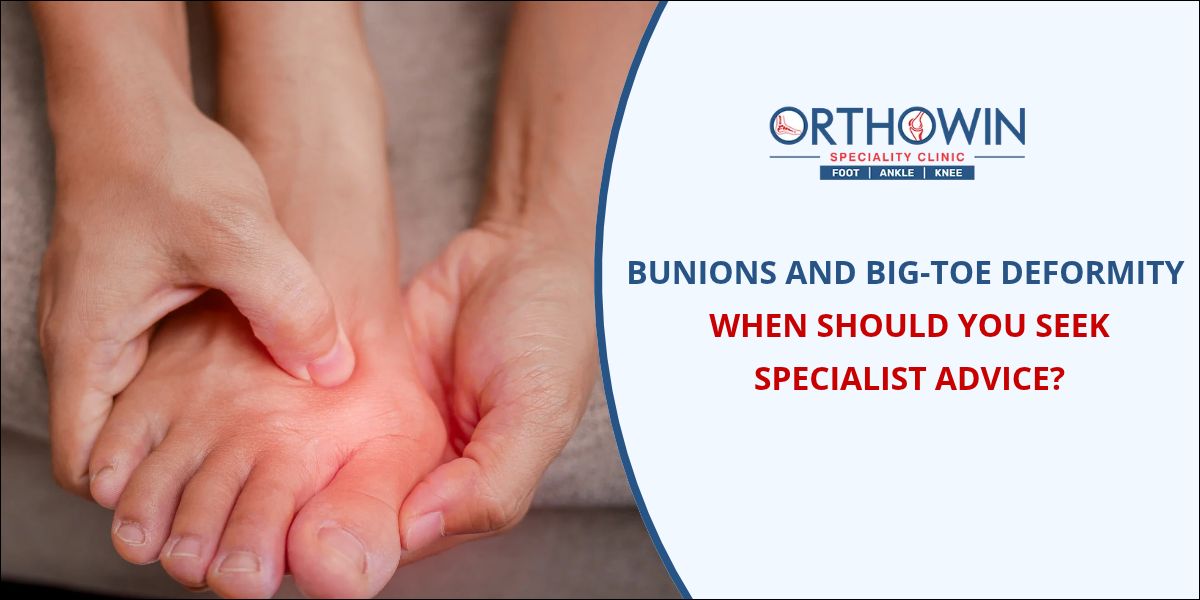
Bunions and big-toe deformity occur when the big toe drifts towards the smaller toes and a bony bump forms at the base of the toe on the inner side of the foot. Many people notice it first as a shoe-fitting problem, then as pain, redness or swelling. A bunion is not always painful, and not every bunion needs surgery. It is worth seeing a foot and ankle specialist when pain, deformity or difficulty with footwear begins to affect your daily activities.
This article explains what bunions are, the common causes and symptoms, the signs that suggest you should seek advice and the treatment options a specialist may discuss.
What Is a Bunion?
A bunion, medically called hallux valgus, is a change in the alignment of the first metatarsal bone and the big toe. The long bone behind the big toe moves outwards, while the toe itself angles inwards. The joint at the base of the toe then becomes more prominent. Over time the deformity can increase, and the big toe may press on or overlap the second toe.
You can read more about the condition on our bunions page.
Bunion or Another Big-Toe Problem?
Not every painful bump near the big toe is a bunion. Other conditions that can affect the big toe include:
- Arthritis of the big toe joint (hallux rigidus): stiffness and pain, often with a bump on the upper surface of the joint and difficulty bending the toe
- Gout: sudden pain, redness and swelling of the joint, often with warmth
- Turf toe: a sports injury of the big toe joint
- Bursitis or a corn: irritation from pressure or friction over the joint
Because the symptoms overlap, an examination and X-ray help to identify the cause before any treatment is chosen.
Common Causes and Risk Factors
- Family history: foot shape and joint looseness can run in families.
- Footwear: tight, narrow or high-heeled shoes may worsen a deformity, although they are not the only cause.
- Flat feet or loose ligaments: these can alter the forces on the big toe joint.
- Arthritis: inflammatory joint conditions such as rheumatoid arthritis may be associated with toe deformity.
- Foot injuries: past injuries can change how the foot bears weight.
- Age and sex: bunions are commonly seen in adults and are reported more often in women.
Our article on bunions and their prevention discusses these factors in more detail.
Symptoms to Look For
- A bony bump on the inner side of the big toe joint
- Pain, burning or soreness over the bump, especially in shoes
- Redness, swelling or warmth around the joint
- The big toe angling towards or crossing over the second toe
- Corns or calluses where toes rub against each other
- Stiffness or reduced movement in the big toe
- Pain in the ball of the foot or in the smaller toes
- Difficulty finding shoes that fit comfortably
When Should You Seek Specialist Advice?
Consider a consultation with a foot and ankle specialist if:
- Pain continues despite changing to roomier shoes and simple measures
- Walking, standing or work is becoming difficult
- The toe is becoming more crooked or the bump is getting larger
- The skin over the bump is red, broken or repeatedly irritated
- The second toe is overlapping, curling up or developing a corn or ulcer
- The big toe is stiff, or movement is painful
- Your foot is numb, tingling or has changed colour
- You have diabetes, poor circulation or reduced foot sensation and notice any foot change
People with diabetes or reduced sensation should not wait, as pressure areas can turn into sores without being noticed. See a doctor urgently if the toe becomes very painful, hot, swollen or red, especially with fever, or if there is a wound that is not healing.
How Are Bunions Assessed?
Your doctor will usually:
- Ask about pain, shoes, work, activities, family history and medical conditions
- Examine the foot while you stand and walk, and check the flexibility of the toe joint
- Assess for flat feet, tight calf muscles and other deformities
- Advise weight-bearing X-rays to measure the angles between the bones and check the joint
These steps help the doctor tell how much the deformity is affecting the foot and which options are suitable. Our guide on bunion causes, symptoms and diagnosis explains this further.
Treatment Options
Non-surgical care
Many people begin with measures that reduce pressure and pain. These do not correct the deformity, but they may ease symptoms:
- Wearing wide-toed shoes with soft uppers and a low heel
- Using bunion pads, toe spacers or silicone sleeves to reduce friction
- Using insoles or arch supports when flat feet contribute to the problem
- Taking pain relief or applying ice, as advised by your doctor
- Limiting activities that increase pain
Surgical options
Surgery may be considered when pain is persistent and affects daily life, and non-surgical care has not helped enough. The procedure depends on the severity of the deformity, the condition of the joint and your age and activity level. Surgeons may realign the bone, rebalance the soft tissues or, in selected cases such as arthritis, fuse the joint. Recovery, the time to return to shoes and activity and the risk of the problem coming back differ between patients, and your surgeon will explain these to you.
Surgery is usually not advised only for the appearance of a bunion. To know more, read about bunion surgery.
Everyday Tips While You Decide
- Choose shoes with a wide toe box and avoid pointed, high-heeled styles for long periods.
- Try footwear in the evening, when feet are slightly larger, and check that your toes can move.
- Avoid standing or walking for very long hours without breaks.
- Check your feet regularly for redness, blisters or broken skin.
- Do not cut or shave a bunion or callus yourself.
Frequently Asked Questions
Can a bunion go away without surgery?
The bony alignment does not usually correct itself. Non-surgical measures such as footwear changes and padding may ease pain, but they do not straighten the toe.
Do all bunions need surgery?
No. Many people manage with simple measures. Surgery is considered when pain or deformity continues to affect daily life despite non-surgical care.
Can tight shoes cause bunions?
Tight or narrow shoes can aggravate a bunion and make symptoms worse, but family history and foot structure also play an important role.
Are exercises or toe spacers enough to correct a bunion?
Exercises and spacers may improve comfort and foot strength, but they have not been shown to reverse an established bony deformity.
Can children and teenagers develop bunions?
Yes, some young people develop bunions, often with a family history. A specialist can advise on monitoring and treatment according to age and growth.
What should I do if I have diabetes and a bunion?
Check your feet daily, wear well-fitting footwear and see a doctor early if you notice redness, sores or numbness.
Consult Dr. Chetan Oswal for Foot and Ankle Care in Pune
If a bunion or big-toe deformity is affecting your walking or your choice of shoes, an assessment can help you understand your options. Dr. Chetan Oswal (MBBS, MS Orthopaedics) is an orthopaedic surgeon with UK training in foot and ankle surgery, practising in Pune. You can read more about Dr. Chetan Oswal.
- Swargate Clinic: Flat No 203, 2nd Floor, Snehganga Building No B, Shankar Sheth Road, Next to Vega Centre, Pune 411037. Monday to Saturday, 10 AM to 1 PM and 5 PM to 8 PM; Sunday by appointment
- PCMC Clinic: B303, 3rd floor, Gera Imperium Oasis, near PCMC Metro Station, Morewadi, Pimpri Colony, Pimpri-Chinchwad 411018
- Phone Number: 88301 52902